

Book Launch: 'I Felt All This' and 'Cooking for the Quarters'
Join us to celebrate the publication of two books on slavery in the antebellum South with authors Professor Emily West and Dr. Beth Wilson
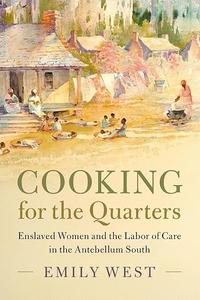
Cooking for the Quarters: Enslaved Women and the Labor of Care in the Antebellum South
Emily West (University of Oxford)
Women who prepared food for the enslaved, rather than enslavers, have been neglected in historical scholarship. Their labor within the quarters has been marginalized, belittled, and even ignored, because it fell within the remit of gendered care and nurture. In this book, Emily West illustrates how these mostly older women performed vital roles in slaveholding sites, as their enslavers increasingly tried to regulate food distribution, preparation, and consumption. Enslavers attempted to impose highly efficient, communal food regimes to minimize waste and time lost from work elsewhere. They routinely tasked older women with the feeding and care of infants, but also deployed them to prepare food for children and enslaved adults to eat collectively. Conversely, in the relative privacy of the quarters, where enslaved people preferred to eat, cooking became both a form of gendered exploitation, and an expression of love, empowerment, and pleasure.
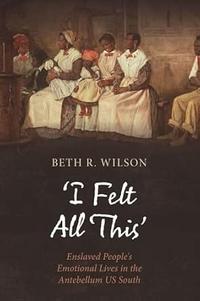
I Felt All This: Enslaved People’s Emotional Lives in the US South
Beth Wilson (University of Warwick)
Drawing on methods from the history of emotions to study enslaved people's lives, Beth R. Wilson exposes the social, cultural and political role that emotion played in the US South. Exploring both individual and collective emotions, Wilson shows how enslaved people resisted white people's attempts to restrict their feelings and expressions by developing their own emotional ideals and expectations. Moving through case studies that examine a range of underexplored forms of testimony, the book introduces readers to slave narratives, letters, written interviews and recorded testimony to show that emotion was central to how enslaved people resisted, survived and remembered the system of slavery. Enslaved people's descriptions of their individual experiences of love, pain, grief and joy are woven throughout this study, which provides a framework that historians can use to paint a nuanced, detailed and empathetic picture of the complex emotional impact of slavery.
This event is run in partnership with Centre for Women’s, Gender and Queer Histories.