


Obituary for Daniel Howe, 1937-2025 by Richard Carwardine
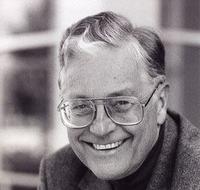
The death on Christmas Day 2025 of Daniel Walker Howe marked the passing of a great historian of the early American republic, one who figuratively bestrode the Atlantic. Before his election as the Rhodes Professor of American History at Oxford University in 1992—moving from his professorial post at UCLA—he had already built a fond relationship with Oxford. The connection began in 1960 at Magdalen, where he read Modern History (a second undergraduate degree after his BA at Harvard). While at Oxford, he met his future wife, Sandra, an American student at St Anne’s. They would return in 1989 when Dan was elected to the visiting Harmsworth Professorship in American History. Following Professor Jack Pole’s retirement, Dan succeeded him as Rhodes Professor in 1992. After stepping down in 2002, he and Sandra were regular summer visitors to Oxford, a city they cherished.
Dan was a past president of the Society for Historians of the Early American Republic (2000-01), Historian-Laureate of the New York Historical Society, and a Fellow of the Royal Historical Society. He made many firm British friends in Oxford and beyond as a regular attender of the annual conferences of BrANCH (British American Nineteenth Century Historians), an organisation founded at much the same time that he took up the Rhodes Professorship.
Dan’s scholarly work enriched the study of antebellum America’s culture, politics and economy through a sequence of outstanding books. The Unitarian Conscience: Harvard Moral Philosophy, 1805-1861 (1970), which won the Brewster Prize of the American Society of Church History, led naturally to a brilliant analysis of the converging religious and economic ideologies of the Whig coalition, The Political Culture of the American Whigs (1984). During his tenure of the Rhodes Professorship, he produced Making the American Self: Jonathan Edwards to Abraham Lincoln (1997), a study of human nature and the self-improving prompts to human behaviour that characterised the new American nation. In retirement Dan produced the dazzling work by which he will be best remembered, What Hath God Wrought: The Transformation of America, 1815-1848 (2007). A volume of the Oxford History of the United States, it won the Pulitzer Prize in history, the New-York Historical Society American History Book Prize, the Society for Historians of the Early American Republic Book Prize, and the Silver Medal of the California Book Awards. It was also a finalist for the National Book Critics Circle Award.
What Hath God Wrought, in Dan’s own words, does not “argue a thesis”: it “tells a story.” For all that, his story challenges the common labelling of the years after the Battle of New Orleans as the “Jacksonian era.” This theme is signalled in the book’s subtitle: the sea-change in the young republic between 1815 and the conclusion of the Mexican American war. The book rejects the interpretation, most forcefully argued in Charles Sellers’s eponymous grand synthesis, that this transformation was the product of “the market revolution”. A market economy, Dan points out, was not new to this period. Rather, he locates the era’s driving force in a communications revolution “greater than had taken place in all previous centuries”: developments in the speed of transport, stunning advances in printing technology, and the invention of the telegraph. The first practical demonstration of the electric telegraph, by Samuel Finley Breese Morse in 1844, launched a breathtaking new era in transmitting news. The words that the inventive professor tapped out in front of the nation’s leaders captured the event’s historic import. Whether “What hath God wrought” was (following scripture) an exclamatory statement or (following Morse’s later punctuation) a question, matters less than that it captured the sense that a providential hand was steering the nation towards a higher level of civilisation.
What Hath God Wrought argues that without the communications explosion, there could have been no effective mass democracy. Likewise, the mass production and swift spreading of information gave rise to humanitarian and moral reform societies, national in their horizons, apparatus, and impact. More darkly, the changes in communications facilitated the era’s primary driving force: the bloody imperialist domination and exploitation of the North American continent by the white people of the United States and their government. The book has a distinctive political slant. Both Democrats and Whigs, it argues, accepted the expanding economic order; what separated them were rival hopes shaped by profoundly different moral and cultural outlooks. The Whigs, Dan maintains, represented the true progressivism of the age. Democrats were self-styled anti-elitists whose common man was the common white man. Their key supporters included the planters of the South, to whom they offered not economic diversification but more of the same: new lands opened to white settlement and slave labour. By contrast, a pantheon of Whig and proto-Whig luminaries wins Dan’s admiration. They include, above all, John Quincy Adams, who “dealt with man as he should be”—unlike Jackson, who “appealed to him as he is.” What Hath God Wrought is boldly dedicated to the memory of John Quincy Adams.
No reader of Dan’s work, no student in his classes, no colleague at a symposium or conference could fail to be in awe of his powerful intellect. It shaped his sensitivity to the moral foundations of politics in the antebellum era, and his understanding—as a man of Christian faith himself—of the mobilising power of religious ideas and institutions. Dan wrote with precision, and spoke just as precisely, if slowly, in his rich bass-baritone voice. That voice was never better deployed than in song: no BrANCH conference was complete without his vocal accompaniment to Connie Schulz’s violin, which combined most memorably in the resonant beer cellar of the University of Wales residential centre at Gregynog.
Dan was naturally sociable and civic-minded, his broad smile bespeaking a sunny temperament. He served as chair of the History Department at UCLA, took a role as Rhodes Professor in the planning of what would become the Rothermere American Institute, and as a Fellow of St Catherine’s College took a foremost role in the activities of its Senior Common Room.
I can’t resist the temptation of this remembrance to register Dan’s generosity to me personally. He reviewed my books, supported my scholarship, and—not least in urging me to apply for the Rhodes Chair when he vacated it—influenced my career profoundly. Equally important, we shared a common love of theatre, Shakespeare, and stage performance.
Quite simply, thank you, Dan.
Richard Carwardine
Rhodes Professor of American History Emeritus

